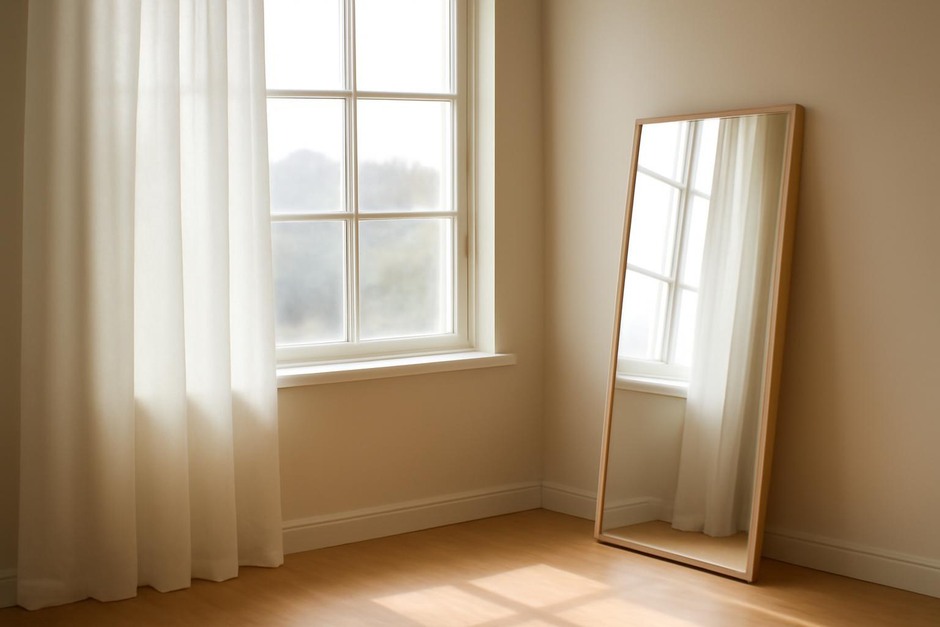
Curtains or Mirrors? Two Practical Approaches to Balancing Window Light
The Question
How can you balance bright window light so a room feels comfortable, plants thrive, and glare or deep shadows are reduced? I tested two common studio approaches: softening the incoming light with fabrics and blinds, and redirecting the same light using reflective surfaces. Below are the step-by-step processes I used, notes from those small experiments, and guidance for choosing between them.
Approach A — Soften the Light: Curtains and Blinds
Process
- Assess the problem: stand at different points in the room at the time of day when light is most intense. Note where glare, hot spots, and deep shadows occur.
- Choose a fabric: opt for sheers for gentle diffusion, medium-weight linen for more control, or blackout for occasional full darkening. Match color to the room — warmer sheers warm the light, white keeps it neutral.
- Install hardware slightly wider and higher than the window frame so curtains can be drawn fully from the glass plane, allowing more control over edge light.
- Layer if needed: pair blinds (slatted or top-down) with a sheer for momentary privacy without losing soft light during the day.
- Tune mid-day: experiment with partial draws, angling slats, or using tiebacks to shape where light lands.
Observations and Pros/Cons
- What it does well: Reduces glare, softens shadows, and makes strong sunlight feel more even. Good for rooms used for reading, laptops, or where you want calmer, cozier light.
- Limitations: Softening cuts overall brightness, which may not be ideal for light-loving plants. Heat can still build up behind heavy curtains on hot days.
- Maintenance: Washing or dusting fabrics occasionally keeps diffusion even; blinds need dusting and occasional alignment.
Approach B — Redirect the Light: Mirrors and Reflective Surfaces
Process
- Map the light: note the direction of incoming sun and the bright patches it creates on floors and walls.
- Select reflective elements: a large mirror, a light-colored panel, polished metal accessories, or a painted ‘light shelf’ above a window are common options.
- Place the reflector: lean or hang a mirror so it catches the strong light and casts it toward darker areas. Test small moves — a few inches can change where the redirected light lands.
- Soften the beam if needed: if the reflected light creates a concentrated glare, pair the mirror with a sheer to diffuse before reflection, or use a satin rather than high-gloss surface.
- Adjust seasonally: steeper winter sun benefits more from low, wide reflectors; higher summer sun may need different placements.
Observations and Pros/Cons
- What it does well: Brightens shadowed areas, preserves overall light for plants, and can make a room feel larger and more even without losing the quality of direct sun.
- Limitations: Poor placement can create new glare points or heat certain spots. Mirrors and shiny surfaces call for occasional cleaning to avoid visible streaks.
- Maintenance: Wiping mirrors and polishing surfaces keeps reflected light consistent; minor repositioning through seasons helps.
Review: What I Learned from Small Tests
I tried both approaches in the same south-facing living room over a few weeks. Sheer curtains turned the noon sun into a pleasant wash, cut glare on the TV, and made the reading corner gentler. A large leaning mirror on the side wall successfully brightened a dim hallway but needed a small silk panel nearby to avoid a bright patch on the couch in late afternoon.
Combining strategies also worked well: a sheer to diffuse directly incoming sun plus a low-reflective panel helped push soft light deeper into the room without creating harsh reflections.
How to Choose Between Them
Use this quick checklist to decide which approach fits your room and needs:
- If glare and harsh shadows are your primary issue: Start with softening (curtains or blinds). Choose light-diffusing fabrics for regular use.
- If the room feels dim in corners or you want to keep brightness for plants: Try redirection with mirrors or pale surfaces to lift shadows without losing overall light.
- If you have a mix of needs (plants plus screen use): Combine a sheer and a reflector, or use layered window treatments so you can switch between modes.
- For renters or tight budgets: Temporary tension rods and lightweight mirrors can give most of the benefit without permanent changes.
- For seasonal variation: Plan for adjustable solutions — movable reflectors or curtains that can be drawn fully in winter to capture warmth.
Final Note
Both approaches are practical and low-tech. The best choice depends on what you want the room to feel like: calm and even (curtains), brighter and more expansive (reflectors), or a flexible mix. Try one small change first — a sheer panel or a leaning mirror — and observe over a week. The test will show whether to lean into softening, redirecting, or combining both.