Top‑Watering vs Bottom‑Watering: A Calm Guide to Choosing the Right Way to Water Indoor Plants
Water is the most frequent care task for indoor plants, and small choices about how you apply it change outcomes. Two familiar approaches are top‑watering (pouring water into the potting mix) and bottom‑watering (allowing the root ball to take up water from a saucer or basin). Both work well if used thoughtfully. Below is a calm comparison, common mistakes and how to correct them, followed by a short decision guide to help you pick the best method for a given plant and situation.
Comparing the approaches
Top‑watering (surface pour)
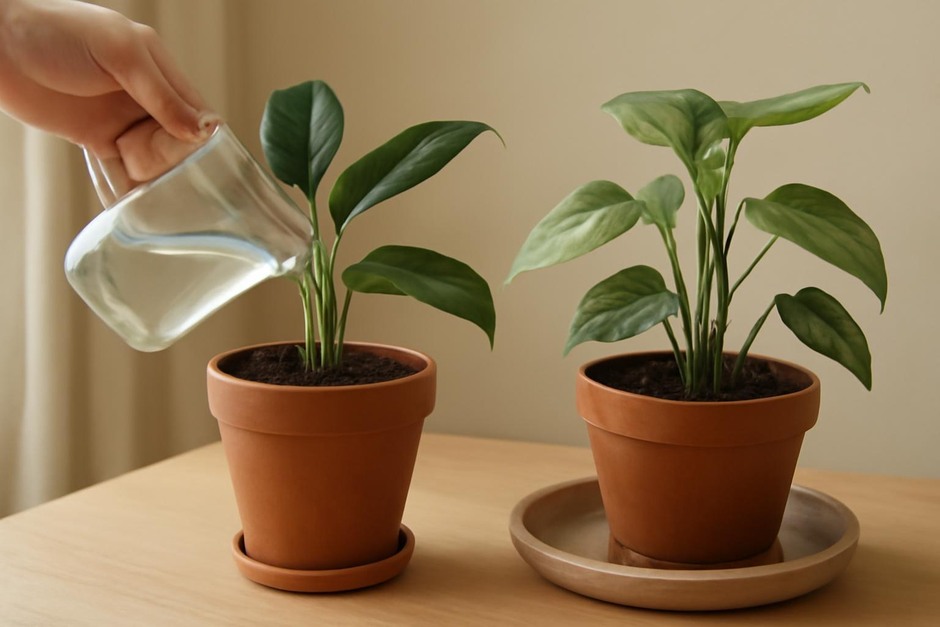
- How it looks: Water is poured over the soil until it runs from the drainage hole or until the surface is saturated.
- Strengths: Rinses salts from the surface, wets the full depth of the pot quickly, and is simple to judge by watching drainage.
- Limitations: Can compact or crust the surface if done too quickly; may overwater top layers while leaving air pockets lower down if potting mix is hydrophobic.
Bottom‑watering (dish soak or sub‑irrigation)
- How it looks: Place the pot in a saucer or shallow basin of water and let the mix draw water up through the drainage hole via capillary action, typically 15–60 minutes.
- Strengths: Encourages roots to grow downward toward moisture, reduces wet foliage and rim mess, and is helpful for plants prone to crown rot if the crown stays dry.
- Limitations: Does not leach salts as effectively; harder to know when the whole root ball is evenly wet unless you check weight or lift the pot.
Common mistakes and useful corrections
1. Assuming one method fits every plant
Mistake: Using the same watering style for succulents, ferns, and tall tropicals. Correction: Match method to plant type. Succulents usually prefer thorough top‑watering then drying; moisture‑loving ferns accept frequent bottom‑watering.
2. Overlooking pot and soil compatibility
Mistake: Bottom‑watering a pot with a clogged drainage hole or dense mix that won’t wick. Correction: Ensure drainage is clear and use a mix with good capillarity (peat‑based or coir blends wick better than chunky, airy mixes). For heavy, hydrophobic mixes, prewet by top‑watering once to rehydrate before trying bottom soak.
3. Ignoring signs of uneven wetting
Mistake: Thinking water reached the root zone when the surface looks moist. Correction: Lift pots to feel weight before and after watering, or use a moisture meter aimed into several depths. For top‑watering, water slowly until you see drainage; for bottom‑watering, allow more time for larger pots.
4. Letting salts build up with repeated bottom watering
Mistake: Relying solely on bottom‑watering and never flushing the potting mix. Correction: Occasionally perform a thorough top flush—water from above until water runs free—to leach accumulated salts and refresh the medium.
5. Wet foliage and crown rot
Mistake: Watering overhead on plants with tight leaf rosettes or soft crowns. Correction: Use bottom‑watering or direct water to the soil line; wipe older, wet leaves dry and allow the crown to remain airy.
Choosing between top and bottom watering: a short checklist
Answer these questions briefly to decide which approach to favor.
- What kind of plant is it? If it prefers drier crowns (e.g., string of hearts, many succulents), lean toward top‑and‑dry cycles; if it likes even moisture (ferns, calatheas), bottom‑watering can help.
- What’s the pot and mix like? Unglazed terracotta and airy mixes dry fast—top‑watering makes sense. Plastic pots and mixes that wick well suit bottom soaks.
- Do you need to flush salts? If yes, schedule periodic top‑watering that runs through the pot.
- Are leaves damaged by splashes? For delicate foliage or plants prone to rot, favor bottom‑watering or direct water at the soil line.
- How much time can you commit? Bottom‑watering needs a basin and minutes of soak; top‑watering is fast but may require more frequent attention to drainage.
Putting it into practice
For many households, a blended routine works best: use top‑watering as your default for monthly flushing and when potting mix needs rewetting; use bottom‑watering between flushes for plants that like steady moisture or to avoid wet foliage. Keep a small basin for bottom soaks and a lightweight watering can for surface pours. Observe—lift pots to learn their dry/wet weight, watch new roots after changing routine, and gently adjust timing rather than whole methods at once.
Small course corrections—clearing a drainage hole, limiting standing water time, or adding a one‑time top flush—solve most problems. With a little attention, you’ll find the combination of techniques that keeps leaves bright, roots healthy, and care calm.