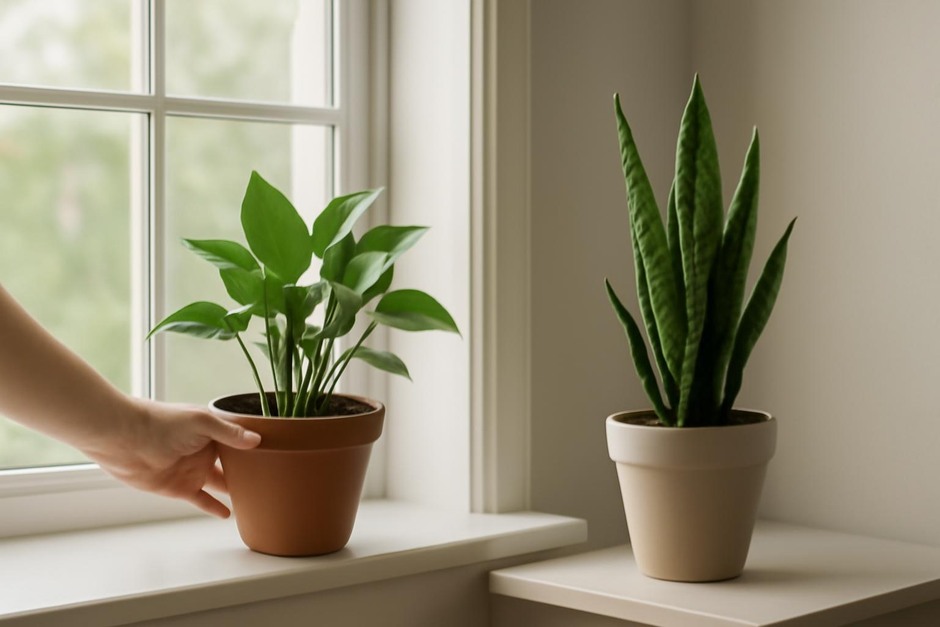
Rotate or Root: Comparing Regular Plant Rotation and Spot Stability for Indoor Plants
When you live with several houseplants, a basic decision repeats itself: should you rotate plants through different spots on a schedule, or give each plant one steady location and leave it there? Both approaches help plants thrive, but they suit different homes, people, and species.
Approach 1 — Regular Rotation
What it is and why people do it
Regular rotation means moving plants around the room or between windows at predictable intervals—weekly, every two weeks, or monthly. The goal is even light exposure, balanced growth, and sharing the best light with multiple plants.
Common benefits
- Prevents one-sided growth by giving all sides similar light over time.
- Helps multiple plants share a prime window without crowding a single spot.
- Makes pests, dust, and early signs of stress easier to notice when you handle plants regularly.
Common mistakes and how to fix them
- Mistake: Rotating too frequently or inconsistently, which stresses plants and interrupts acclimation.
Fix: Pick a steady cadence (for many plants, once every 2–4 weeks) and stick to it so each move lets the plant settle. - Mistake: Moving plants between spots with radically different light (direct sun one day, deep shade the next).
Fix: Match the general light level when rotating—swap east-window plants with other east-window spots or similar bright but indirect locations. - Mistake: Handling fragile species roughly during moves.
Fix: Lift by the pot base, support long stems, and avoid moves during active stress (recent repotting, flowering, or pest treatment).
Approach 2 — Spot Stability
What it is and why people do it
Spot stability means assigning each plant a consistent place and leaving it there for long stretches. This approach trusts the plant to acclimate and lets you tune care to that spot’s specific conditions.
Common benefits
- Plants fully acclimate to local light, temperature, and drafts, often showing steadier long-term growth.
- Less handling reduces risk of damage, soil disturbance, or transplant shock.
- Practical for heavy plants, large pots, or spaces where moving items is awkward.
Common mistakes and how to fix them
- Mistake: Letting one side of a plant languish in shade, resulting in lopsided growth.
Fix: Occasionally turn the plant a quarter to a half turn every month if it leans toward the light; this is a small, measured action that keeps roots and foliage steady while correcting lean. - Mistake: Overlooking subtle declines because the plant is rarely handled.
Fix: Keep a short weekly glance: check soil moisture, new leaf color, and underside of leaves for pests. - Mistake: Putting a plant permanently in a marginal spot (too dark or too hot).
Fix: Run a simple light test across the day before committing—if a spot falls short for the species, find a better steady home or consider rotation.
How to Choose Between Rotation and Stability: A Calm Checklist
Use this checklist to match an approach to your plant, space, and routine.
- Know the plant’s light tolerance. If the species tolerates a broad range (most pothos, sansevieria, zz), rotation is low risk. If it needs steady bright indirect light (many orchids, some gesneriads), prefer stability in a good spot.
- Consider growth habit. Trailing or vining plants often tolerate—and sometimes benefit from—rotation to encourage even trailing. Columnar or single-stem plants may favor a stable, upright home.
- Check pot size and weight. Heavy or large pots are impractical to move often—favour stability. Small, lightweight pots are easy to include in a rotation.
- Assess your schedule and energy. If you enjoy a weekly plant ritual, rotation can be rewarding. If you prefer low-handling care, stability with occasional checks is better.
- Match to room light variability. Rooms with predictable, uniform light let you assign reliable spots; rooms where light changes dramatically across windows benefit from rotation to share the best exposures.
- Factor in aesthetics and plant placement needs. If plants are part of a display that should remain balanced visually, rotation helps. If a particular plant anchors a corner or shelf, stability supports that role.
- Plan for special moments. For flowering or newly repotted plants, lean toward stability until they finish blooming or recover—then return to your chosen routine.
In practice, many people use a mix: keep large or sensitive plants stable, rotate smaller or fast-growing ones, and adopt simple rules (rotate small pots every three weeks; turn stable pots a quarter monthly). The quiet key is consistency—pick an approach that fits your plants and your life, and use the small corrections above when things wander.