Reading Your Plant’s Leaves: Practical Clues from Shape, Color, Texture, and Growth
One morning I noticed a single ficus leaf pointing straight down while the rest of the plant held itself upright. That one leaf, small and stubborn, became a daily prompt: watch, note, and adjust. Over time I learned that leaves collect a quiet record of light, water, pests, and stress. With a few reliable visual checks you can read that record and make modest, measured changes that keep plants thriving.
1. Shape and posture: the leaf’s angle and form
Start by noting how leaves position themselves in the day. A leaf’s angle, whether it curls, and if edges roll can point to immediate conditions.
- Drooping or limp leaves — often the simplest clue. If most leaves are limp by mid-day it can be underwatering, but if they recover by evening it may be normal daily fluctuation. Persistent limpness suggests checking soil moisture and pot drainage.
- Leaves curling or cupping — upward cups can indicate low humidity or heat stress; downward curling can follow overwatering or root issues. Test: raise ambient humidity for a week and note change, then revert if no improvement.
- Twisted or asymmetrical leaves — uneven light exposure or mechanical damage. Rotate the plant slowly to encourage balanced growth.
2. Color: reading the palette from pale to mottled
Color changes are among the clearest signals, but they require context. A pale winter leaf differs from one that suddenly fades in summer.
- General paling or yellowing — check for light levels first. Many shade-adapted plants yellow in bright, direct sun; sun-loving plants pale when understimulated. Also confirm water: consistent yellow on lower leaves often means overwatering.
- Speckling, stippling, or mottling — small, irregular spots can be pest feeding or nutrient deficiency. Inspect undersides for tiny insects and gently wipe a suspect leaf to see if residue appears.
- Brown tips or edges — a common sign of inconsistent water, low humidity, or salt build-up from fertilizer. Flush the potting mix occasionally and trim crisped tips for clarity.
3. Texture and surface: gloss, dust, residue, and spots
Feel and surface appearance tell you about cleanliness, pests, and disease risk. A quick tactile check accompanies visual reading.
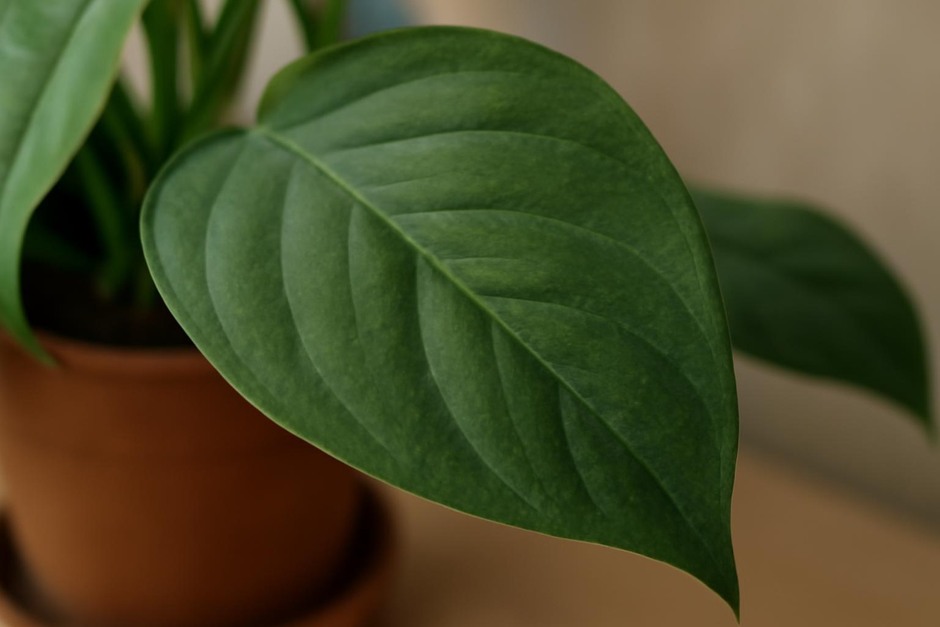
- Loss of sheen — a dull leaf often means dust, a light fungal film, or declining vigor. Wiping leaves with a soft, damp cloth restores gas exchange and makes new problems easier to see.
- Sticky or shiny residue — honeydew from aphids or scale creates a sticky film that attracts sooty mold. Look for clusters near new growth and the undersides of leaves.
- Powdery or fuzzy coatings — distinct white powder suggests powdery mildew; a more localized fuzzy growth can be mold in overly humid, poorly ventilated conditions. Increase airflow and remove affected leaves.
4. Growth pattern and timing: what new leaves and spacing reveal
Observe how often new leaves appear, their size compared to older ones, and whether the plant produces long internodes (leggy growth).
- Small new leaves — often a sign of reduced light, limited nutrients, or seasonal slowdown. If growth remains stunted after a light adjustment, consider a modest feeding during the active season.
- Elongated stems and wide gaps — classic shade response. Move the plant to a brighter spot or provide gentle supplemental light for winter months.
- Sudden leaf drop after new growth — ambient shifts such as temperature swings, drafts, or repotting stress. Keep conditions steady and let the plant acclimate.
Measured conclusion: small observations, small adjustments
Leaves don’t speak loudly, but they are consistent. Adopt a slow rhythm: observe a plant over several days, note one or two recurring leaf signs, and try a single modest change — adjust light a few inches, alter watering frequency, or increase humidity with a tray. Record what you see; patterns emerge from repeated notes rather than one-off fixes. Over time your eye will learn the subtle differences between a leaf that needs a drink and a leaf that needs air, between seasonal slowdown and persistent imbalance. With careful observation and steady, modest responses, most leaf complaints resolve into better, more intuitive care.