Scheduled Watering vs. Watering by Feel: A Calm Checklist to Stop Common Mistakes
Two Approaches, One Goal
When caring for houseplants, people tend to fall into one of two routines: follow a fixed watering schedule (every Monday, every two weeks) or water when the plant seems to need it, guided by touch, sight, or weight. Both approaches can work, but each brings predictable mistakes. Below is a calm checklist contrasting common errors and straightforward corrections for each method, followed by guidance to help you choose which approach fits your plants and your life.
Approach A: Scheduled Watering
What it is: watering plants on specific days, often the same interval for many plants.
Common mistakes
- One-size-fits-all intervals: Treating all pots and species the same, which ignores differences in soil, pot size, and light.
- Ignoring seasonal changes: Keeping the same schedule through winter and summer despite different growth rates and water needs.
- Relying on calendar, not conditions: Watering because the date says so rather than checking the soil.
- Over-reliance on habit: Watering out of routine even when a plant shows signs of damp soil or slow growth.
Practical corrections
- Use the schedule as a reminder, not a rule: Mark check-ins on the calendar to inspect plants, then decide whether to water.
- Differentiate intervals: Create separate schedules by pot size, soil mix, and plant type (succulent vs. fern, for example).
- Adjust seasonally: Stretch intervals in winter, shorten them in active growth seasons.
- Combine with a simple moisture check: Use a finger, chopstick, or inexpensive meter before following through.
Approach B: Watering by Feel (Sensory Watering)
What it is: deciding to water based on observations—soil dryness to the touch, pot weight, wilting, leaf color, or the plant’s overall appearance.
Common mistakes
- Misreading signs: Confusing droop from underwatering with droop from overwatering or root issues.
- Inconsistent checks: Relying on memory or infrequent glances rather than a brief routine inspection.
- Topsoil bias: Touching only the surface and missing wetter soil deeper down.
- Emotional watering: Giving water as a comfort or because a plant looks sad in low light, not because the soil needs it.
Practical corrections
- Check deeper: Probe one to two inches down with a finger or stick; some moisture at depth is normal and often good.
- Learn species signals: Note how each plant displays thirst—leaf curl, color change, or lightweight pots differ by species.
- Establish a quick inspection habit: Spend two minutes twice a week turning pots and checking soil, weight, and leaf condition.
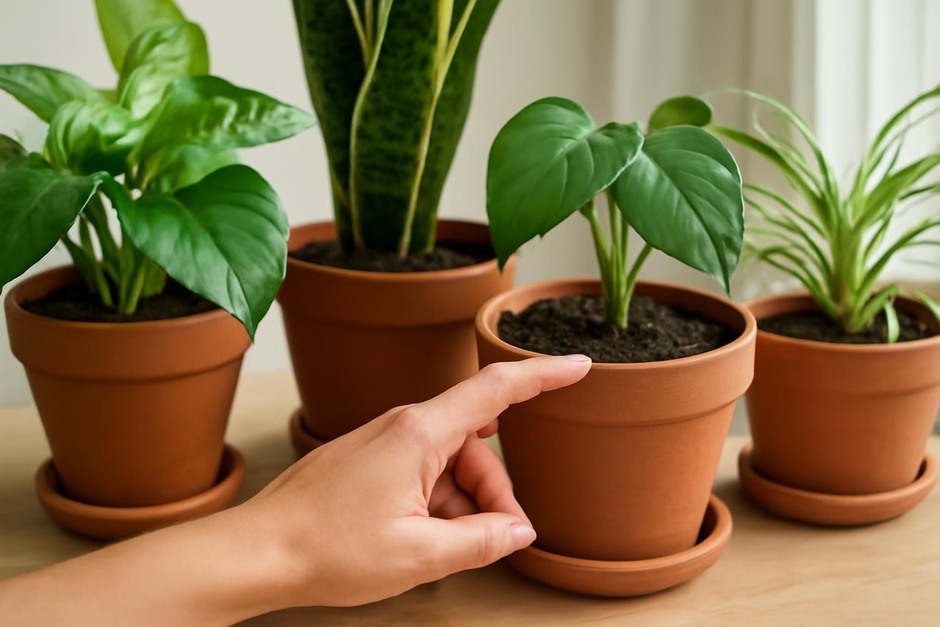
- Use weight as a test: Lift smaller pots when dry and after watering to learn the difference; the weight method is fast and reliable.
Deciding Which Method to Use
Both approaches can be blended. Choose based on these practical factors:
- Number and variety of plants: If you have many different species, a lightweight schedule for check-ins plus sensory decisions often scales best.
- Your routine and time constraints: If you prefer structure and know you’ll forget ad-hoc checks, a schedule with conditional checks is safer. If you spend regular time with your plants, sensory watering can be more precise.
- Plant sensitivity: Plants prone to root rot (many tropicals) benefit from checks before scheduled watering. Drought-tolerant plants (some succulents) do well with longer, scheduled intervals.
- Container and soil: Fast-draining mixes and small pots need more frequent attention; dense mixes and large pots retain moisture longer and suit longer intervals.
A Calm, Practical Routine to Try
Use this hybrid checklist to reduce mistakes:
- Set a weekly or biweekly calendar reminder titled “Plant Check.”
- At each check, do three quick steps: weigh the pot (or lift if small), probe the soil 1–2 inches deep, and scan leaves for unusual droop or discoloration.
- If the pot is noticeably light or the probe is dry where the roots sit, water thoroughly. If the soil is damp at depth, skip watering and note the next check.
- Adjust subsequent checks for heat, humidity, or seasonal slowdown—shorten intervals during active growth, lengthen them in winter.
- Keep a small notebook or simple notes on your phone about each plant’s preferred rhythm—the small habit pays off quickly.
Both scheduled and sensory watering have merit. The most reliable approach is the one that helps you notice and respond to conditions consistently. Use a calm checklist, correct the predictable mistakes above, and your plants will experience fewer extremes of drought or soggy soil.