Gently Correcting Leggy Growth: A Calm Checklist for Common Mistakes and Fixes
Leggy growth — long stems, sparse leaves, and a plant that seems to be reaching for something — is one of the quietest frustrations in indoor gardening. It isn’t dramatic, but it changes the look and health of a plant over time. Below is an opening observation followed by four focused sections: each names common mistakes that make plants stretch and offers calm, practical corrections you can try.
Opening observation: Noticing the reach
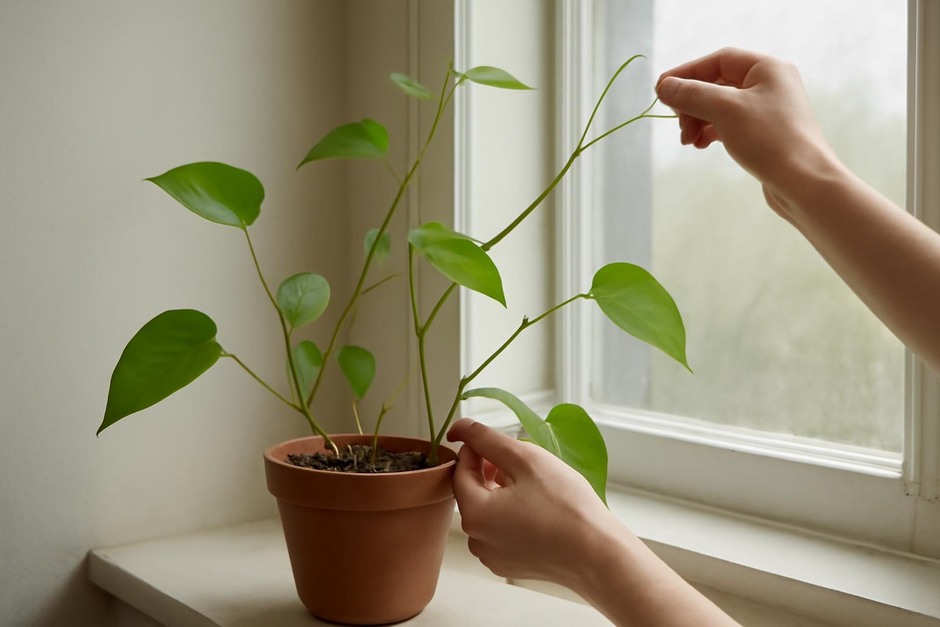
Before you act, take a moment to note what the plant is doing. Is new growth few and far between? Are leaf nodes spaced far apart? Are stems bending toward a window or a lamp? These signs typically point to insufficient or uneven light, but other factors can contribute. The checklist below helps you separate causes and pick modest corrections that fit your space and schedule.
1. Light: The most common culprit
Common mistakes:
- Placing a plant too far from its light source, assuming “bright room” is the same as “bright spot.”
- Keeping the plant in a fixed orientation so only one side receives light.
- Using a light source that’s too weak or incorrectly positioned (light above instead of in front for vining plants).
Useful corrections:
- Move closer, not farther. Bring the plant nearer the window or a stronger light for a few weeks and watch for denser new growth. Even a foot or two can matter.
- Rotate gently. Turn the pot a quarter-turn each week so growth is more even; try a simple rotation schedule rather than constant turning that can stress the plant.
- Adjust the angle. If stems bend upward from beneath a shelf, try lowering the plant or angling a curtain to let light in from the side so leaves open instead of stretching upward.
2. Water and feeding: Under- and over-correction
Common mistakes:
- Watering too infrequently or in too large quantities, causing leaves to drop and stems to become sparse.
- Fertilizing erratically, which may push weak growth instead of nourishing compact nodes.
- Assuming more water or fertilizer will thicken a leggy stem quickly.
Useful corrections:
- Favor steady, modest care. Water according to the plant’s needs and pot size; a steady schedule that matches the species prevents stress that can encourage stretching.
- Use light feeding. A mild, balanced fertilizer during active growth helps new nodes form without encouraging lanky, weak shoots.
- Check moisture, not the calendar. For many plants, waiting until the top inch or two of soil dries prevents both overwatering and the weak, etiolated flushes that follow recovery from extremes.
3. Potting and soil: When roots change behavior
Common mistakes:
- Keeping a plant rootbound for too long, which can reduce vigor and cause sparse above‑ground growth.
- Using heavy or compacted potting mixes that limit oxygen and root spread.
- Repotting into an oversized container that encourages leafless stretch while roots catch up.
Useful corrections:
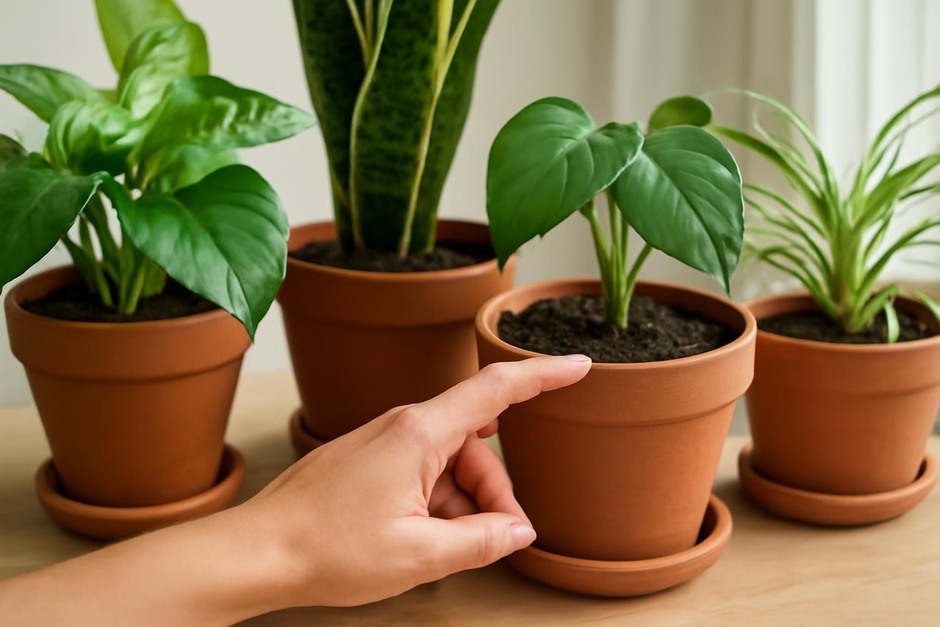
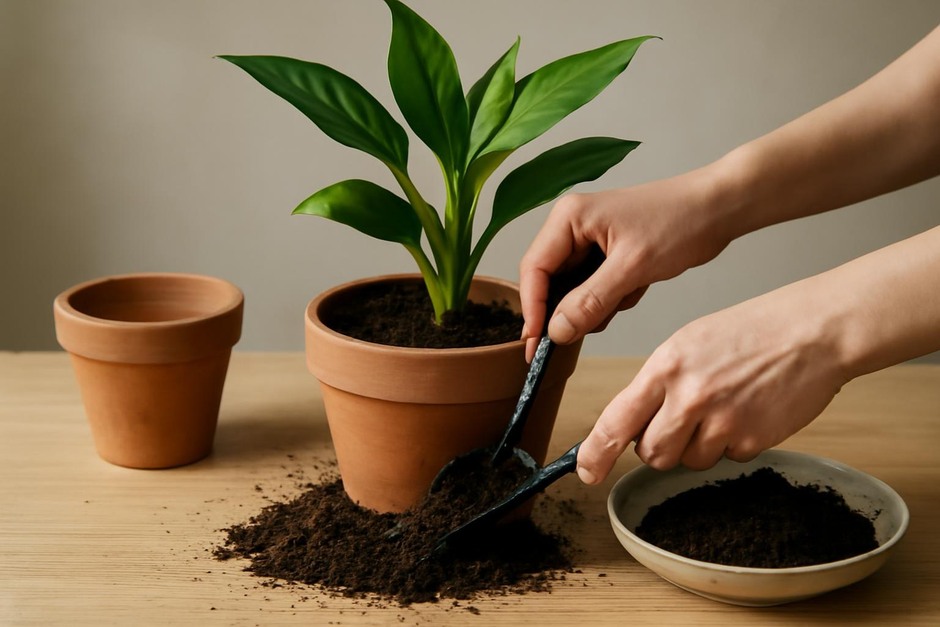
- Match pot size to plant size. Move up a pot only when roots significantly fill the container; avoid much larger pots that leave soil too wet for too long.
- Choose airy mixes. A light, well-draining mix often improves root health and supports sturdier above-ground growth.
- Prune roots sparingly. If a plant is very rootbound, a modest root trim before repotting helps roots reestablish without prompting a long, weak growth spurt.
4. Pruning and mechanical support: Shape and strength
Common mistakes:
- Avoiding pruning for fear of damaging the plant, which leaves old sparse stems in place and reduces light for new shoots.
- Failing to provide support for naturally vining or climbing plants, allowing stems to flop and become leggy.
- Pruning too aggressively in a single session and then not following up with improved light or care.
Useful corrections:
- Trim selectively. Remove the weakest, longest internodes to encourage branching. Cut above a leaf node so new shoots can emerge from a nearby point.
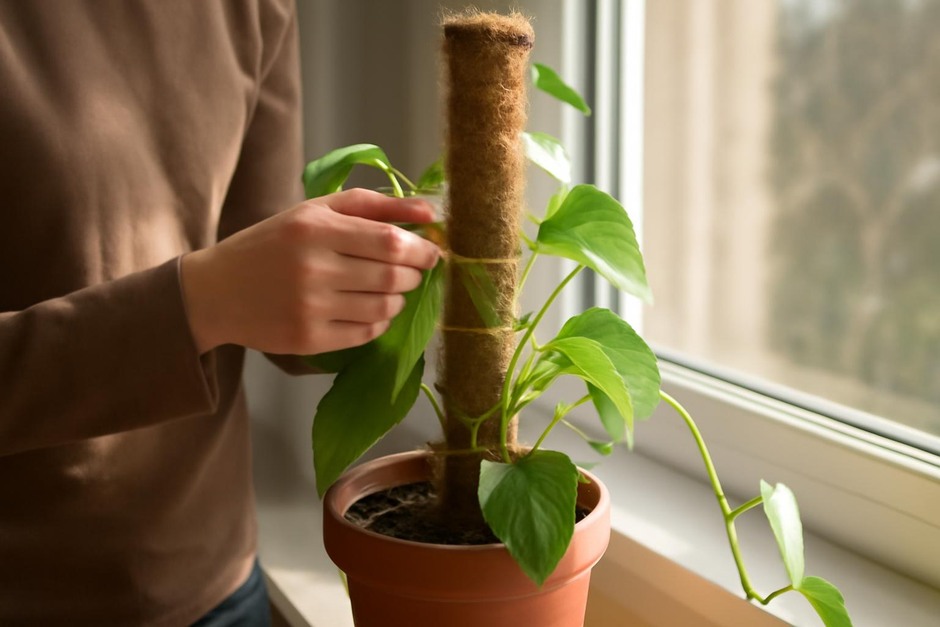
- Use gentle supports. Stakes, small trellises, or rings help vining plants grow upward and present new nodes to light more evenly.
- Opt for staged pruning. If a large pruning seems necessary, do it over a few sessions so the plant can respond steadily while you correct light and watering.
Measured conclusion
Leggy growth rarely requires dramatic intervention. The most reliable approach is small, consistent adjustments: improve or redistribute light, stabilize moisture and feeding, check pot and soil, and prune or support with intention. Make one change at a time, observe for a few weeks, and then decide on the next step. With gentle corrections and patience, a stretched plant often returns to fuller, more compact growth without rush or fuss.